
Bid Wars 2: Auction Simulator
By Aliens L.L.C-F.ZStrategy
4.5105.44K Reviews
- Version
- 2.42
- Installs
- 10.00M
- Age Rating
- Everyone
Screenshots




Our Review of Bid Wars 2: Auction Simulator
 Analysis by Appyee
I went into Bid Wars 2: Auction Simulator expecting a simple bidding game, but its strongest quality is how quickly it turns a familiar auction into a small business routine. I inspect a storage unit, decide how far I am willing to bid, sort through the contents, and try to turn questionable finds into enough money for the next opportunity. That loop is easy to understand, yet it creates more tension than I expected because every purchase asks me to balance curiosity against risk.
This is a free strategy game from By Aliens L.L.C-F.Z, aimed at Everyone, and it has been available since November 29, 2017. The current version is 2.42, and it runs on Android 8.0 or later. Its broad appeal is clear: the game has passed 10 million installs, with an average rating of 4.5 from around 1.5 million ratings. Those figures do not replace personal experience, but they do match my impression that this is an accessible game with a large audience rather than a niche simulation built only for dedicated strategy players.
Why the opening auction works so well
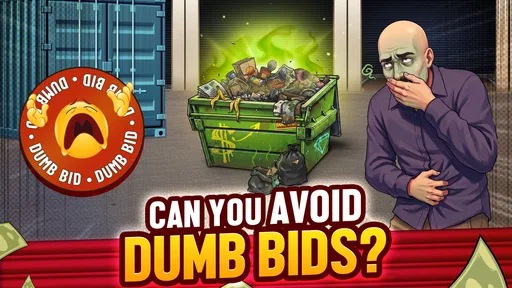
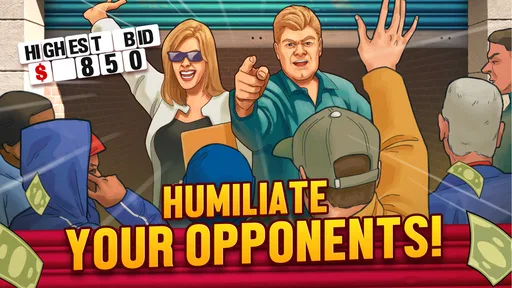
The first thing that caught my attention was the clean connection between presentation and play. An auction is visually understandable without a long explanation: several buyers look at a lot, the value is uncertain, and the winning bid can either be a clever investment or an expensive mistake. The interface keeps that idea in front of me. I am not managing a complicated spreadsheet before I get to the fun part; I am making a quick decision under pressure.
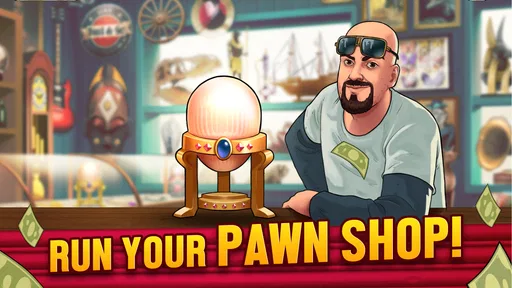
That speed is important. The game does not ask me to learn a large fictional universe before I can enjoy it. Its setting is built around the recognizable world of storage auctions and pawn-shop dealing, so the visual language immediately supports the central fantasy. I feel like I am building a modest resale business, not commanding an abstract collection of menus.
The presentation also gives the game a slightly playful tone. Rare objects, uncertain lots, and competing bidders make the setting feel colorful rather than harsh. I never read the mood as a serious economic simulator. Instead, it sits between a casual puzzle and a light tycoon game, which is exactly why it works well in short sessions.
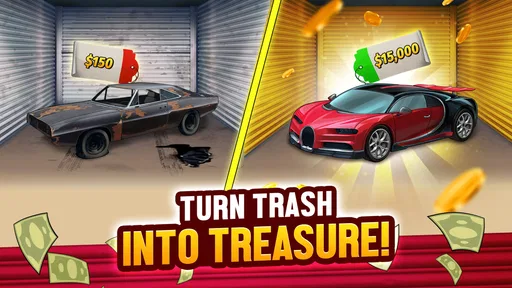
One useful detail is that the game makes uncertainty part of the entertainment. A storage unit is not simply a box with a known profit printed on it. I have to judge whether the possible contents justify the bid, then deal with the result. That means the visual promise of a lot matters, but it cannot be treated as a guarantee. The best decisions often come from controlling enthusiasm rather than chasing the most exciting-looking option.
The setting gives every decision a reason
The pawn-shop theme provides a natural reason for the game’s progression. Buying and selling are not disconnected activities; they form a chain. I acquire something, consider its value, and use the result to improve my position. That makes the setting more than decoration. The idea of becoming a small tycoon gives context to upgrades and repeated auctions, even when the underlying action remains simple.
I especially like how the game turns ordinary objects into small moments of discovery. The appeal is not only finding something valuable. It is also seeing how a low-cost purchase can become useful when I manage it carefully. That creates a different kind of satisfaction from a traditional strategy game, where the important resources are usually armies, territory, or production chains.
There is a trade-off here. Players looking for a detailed business simulator may find the setting lighter than expected. The game uses the language of buying, selling, and ownership to create a playable fantasy, but it is designed for quick decisions and steady progress rather than a fully realistic account of running a pawn business. I see that as a strength for casual players and a limitation for anyone wanting deep economic modeling.
Art direction keeps the auction readable
The art direction supports clarity first. During an auction, I need to understand what is happening quickly, and the game’s visual approach keeps attention on the lot, the competing bidders, and the consequences of my choice. It does not bury the basic action under elaborate presentation. That restraint helps the game feel approachable on a phone.
The world also benefits from visual contrast between the uncertainty of the auction and the more controlled feeling of ownership. A lot represents possibility and risk; the shop represents the reward for making good choices. Even without turning every screen into a detailed simulation, the game communicates that movement from speculation toward business management.
My practical advice is to treat the art as a prompt for investigation, not as a promise of profit. A visually tempting unit can encourage an emotional bid, and that is precisely the behavior the game is asking me to manage. I get better results when I pause before the final bid and ask whether the possible upside is worth losing funds that could support the next part of my business.
Sound, pacing, and the feel of a short session
The game’s rhythm is one of its most effective design choices. Auctions create brief bursts of attention, while sorting out the results and planning the next move gives me a calmer interval. That alternation prevents the whole experience from feeling like a constant stream of identical taps. The pace is lively when a decision matters and more relaxed when I am handling the aftermath.
That structure makes it easy to fit into everyday use. I can play during a short break, complete a small stretch of buying and selling, and stop without feeling that I have abandoned a long real-time commitment. It also works when I have more time, because the progression gives me a reason to continue beyond a single auction.
The sound design contributes to the mood by reinforcing the sense of activity around the bidding process. I read the audio as supportive rather than dominant: it helps the auction feel like an event, but the game does not depend on sound alone to explain what I should do. That matters for a mobile title, since I may play with the volume low or turned off.
Still, players who want a rich, story-driven atmosphere should set their expectations carefully. The mood comes from the combination of auction tension, business progression, visual presentation, and pacing rather than from a dramatic narrative. I enjoy that compact approach, but it means the game’s emotional range is narrower than a role-playing game or a heavily scripted management title.
How I manage the rhythm instead of rushing it
The most useful habit I developed was separating the excitement of winning from the quality of the purchase. Winning an auction feels like progress, but it can also be the moment when I have paid too much. I try to think of the bid as the beginning of a calculation rather than the conclusion of a victory. That small mental change makes the game feel more strategic.
I also avoid treating every session as a race to spend everything. Keeping enough flexibility for a later opportunity is more valuable than filling every available moment with purchases. This is one of the game’s less obvious lessons: the best action is sometimes restraint. A player who bids on every appealing lot may experience more immediate excitement but less reliable progress.
For an everyday example, I might open the game while waiting for an appointment. I can inspect an auction, make one careful bid, and decide whether to continue based on the result. If I have a longer evening, I can use that time to review the business side and think about which opportunities deserve attention. The same core loop works at both lengths, although the shorter session favors quick judgment while the longer one rewards more deliberate planning.
Where the strategy supports the theme
The central mechanics fit the setting because they make value uncertain and decisions personal. I am not simply collecting objects because a checklist tells me to. I am trying to recognize an opportunity, accept the risk of paying for it, and turn the outcome into progress. That relationship between uncertainty and reward gives the strategy a clear identity.
The game is also more approachable than many traditional strategy alternatives. A complex 4X game may ask me to learn diplomacy, production, research, and combat before I understand why a choice matters. Here, the core question is much more immediate: should I bid, and can I make this purchase work? That makes it a good introduction for someone who likes management ideas but does not want a dense ruleset.
Compared with a pure idle tycoon game, this title gives me more agency during acquisition. I am not only waiting for income to accumulate. I participate in the risky moment that creates the inventory. Compared with a conventional auction game, it adds a longer-term reason to care about each lot because the goal is not merely to win a round. I am trying to build a sustainable operation.
The compromise is that neither side is explored with maximum depth. It is not as detailed as a serious business simulator, and it is not as mechanically focused as a competitive bidding game designed around auctions alone. I think that middle ground is intentional. The game wants the drama of a bid and the satisfaction of progression without demanding that I study a complete economic system.
Practical decisions that make the loop stronger
My first concrete tip is to establish a personal stopping point before the bidding becomes intense. If I decide in advance how much risk I can accept, I am less likely to let the excitement of competition control the outcome. This is especially useful when a lot looks unusually promising, because the most attractive opportunity is also the easiest one to overvalue.
My second tip is to judge progress by what a purchase enables, not only by the item itself. A successful sale is valuable because it gives me room to make better future decisions. If I spend all available resources on a single uncertain opportunity, I may lose the flexibility that makes the next auction interesting. The game rewards thinking in sequences rather than isolated wins.
A third insight is that the pawn-shop layer changes how I view apparently ordinary finds. Something does not need to be the rarest discovery to matter. A steady series of sensible transactions can support progress more reliably than waiting for one spectacular result. That approach makes the game less dependent on luck and gives careful players a way to enjoy the strategy even when the most exciting items do not appear.
I would also recommend playing with a clear goal for each session. One session might focus on making a cautious purchase; another might be about strengthening the shop side of the business. Without a small objective, the loop can blur into repeated auctions. With one, the same actions feel more purposeful and the progression becomes easier to evaluate.
Who will enjoy it, and who should skip it
This is a strong choice for players who like casual strategy, light tycoon systems, and the tension of making decisions with incomplete information. It suits people who enjoy discovering value, managing risk, and seeing a small business grow without committing to a long uninterrupted play session. It is also a sensible pick for someone who wants a strategy game that can be understood quickly.
I would be more cautious about recommending it to players who dislike luck or uncertainty. Even careful planning cannot remove the emotional swing created by an unexpected purchase. If you want every result to follow from perfectly predictable information, the auction format may feel frustrating rather than exciting.
It may also be the wrong choice for anyone searching for a historically accurate auction experience, a deep financial simulator, or a narrative adventure with substantial character development. The game’s pleasure comes from its compact loop and playful business fantasy. A more serious management game would be better for players who want detailed forecasting, while a story-focused game would offer stronger world-building and emotional continuity.
The free entry point makes it easy to try, but the monetization deserves attention. In-app purchases range from $0.49 to $229.99 per item. I would approach those purchases as optional conveniences rather than part of the core reason to play. Anyone who prefers a completely fixed-cost experience should be especially mindful of how much they are willing to spend before beginning a longer progression.
My final view of the auction atmosphere
What stays with me is the coherence between the game’s mood and its mechanics. The setting suggests uncertainty, the art keeps the choices readable, the sound and pacing give auctions a sense of occasion, and the business layer makes each decision matter beyond the current screen. None of these elements tries to overpower the others. Together, they create a light but recognizable auction-world atmosphere.
The game is at its best when I play it as a sequence of measured risks rather than a machine for constant rewards. I enjoy the moment before a bid, the doubt after winning, and the satisfaction of making a questionable purchase work. That emotional progression gives the simple controls more character than I expected.
There are clear limits. The simulation is not designed to satisfy players who need extensive economic detail, and the uncertainty can wear thin for anyone who prefers complete control. The progression can also feel less interesting if I stop thinking about why I am making each purchase. The game depends on my willingness to engage with its risk-and-reward rhythm.
For me, that is enough to recommend it as a free strategy game for short, repeatable sessions. I would suggest starting slowly, resisting bids made purely from excitement, and treating each sale as part of a larger plan. If the idea of turning uncertain finds into a growing pawn-shop business sounds appealing, Bid Wars 2 delivers a focused and approachable version of that fantasy. It is not the deepest tycoon simulation, but its art direction, sound, setting, and pacing give the auction loop a distinct mood that keeps me coming back.
Verdict
Strengths of Bid Wars 2: Auction Simulator
- Quick auction rounds make it easy to play in short sessions.
- Different locations offer varied auction themes and item pools.
- Simple controls are suitable for casual players of all ages.
- Collection goals add an extra reason to keep searching for rare items.
- Offline play is useful when you do not have a stable internet connection.
Limitations of Bid Wars 2: Auction Simulator
- Energy limits can interrupt progress during longer play sessions.
- Random item values may make outcomes feel luck-based at times.
- Upgrading storage and tools can become expensive as you advance.
- Ads may appear frequently unless you choose an optional purchase.
- The gameplay loop can feel repetitive after mastering the auction basics.
Similar Picks in This Category
View All
Clash of Clans
Supercell4.5

Plants vs. Zombies™
ELECTRONIC ARTS3.7

Lords Mobile: Kingdom Wars
IGG.COM4.5

Clash Royale
Supercell4.4

State.io — Conquer the World
CASUAL AZUR GAMES4.1

Car Driving School : Car Games
Spark Game Studios3.9
Frequently Asked Questions
What is Bid Wars 2: Auction Simulator?
Bid Wars 2: Auction Simulator is a casual strategy game centered on storage-unit auctions. You compete against other bidders, inspect units, estimate the value of hidden items, and sell your discoveries for profit. The game combines bidding, collecting, light business management, and progression through different locations, making it more accessible than a realistic auction simulation.
How does bidding work in Bid Wars 2?
Each auction requires you to judge whether a storage unit is worth pursuing before committing your money. You compete with rival characters who raise the price, so bidding too aggressively can reduce or eliminate your potential profit. After winning, you review the items inside and decide what to sell, keep, or use to improve your overall progress.
Is Bid Wars 2: Auction Simulator free to download?
Bid Wars 2 can generally be downloaded and played for free, although the game may include optional in-app purchases and advertising. These extras can provide convenience, additional resources, or faster progression, but they are not necessarily required to experience the main auction gameplay. Players should review the store listing for the current pricing and purchase details.
Can Bid Wars 2 be played offline?
Some parts of Bid Wars 2 may remain accessible without a constant internet connection, but online features, advertisements, cloud-related functions, updates, and certain game services may require connectivity. Offline availability can also vary depending on the device and version installed. For the most reliable experience, it is recommended to launch the game while connected to the internet.
Is Bid Wars 2 suitable for children and casual players?
Bid Wars 2 is designed to be easy to understand, with simple controls, short auction sessions, colorful visuals, and a progression system suited to casual play. However, parents should check the current age rating because the game may contain advertising, optional purchases, or references related to gambling-style bidding. It is wise to enable purchase restrictions on shared devices.
Play our best games!


